Electric vehicles (EVs) are charged using different charger types, speeds, and connectors. Understanding a few core concepts helps you choose the most practical charging option for your needs.
Power vs. Energy
- Kilowatts (kW) measure charging power — how fast electricity flows into the vehicle.
- Kilowatt‑hours (kWh) measure energy — how much electricity a battery can store.
- Higher kW means faster charging, while higher kWh means more driving range.
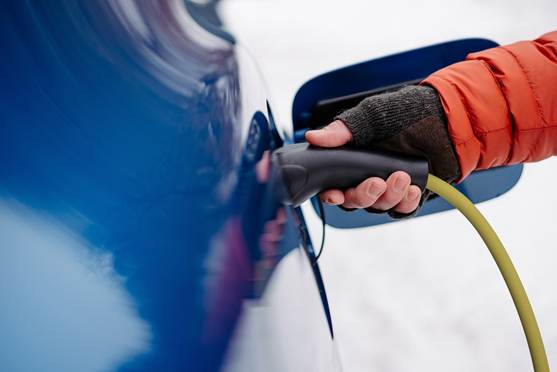
EV Charging Levels
- Level 1 (120 V)
- Adds roughly 5–8 km of range per hour
- Uses a standard household outlet
- Best for overnight home charging and low daily driving
- Level 2 (208–240 V)
- Adds about 20–60 km of range per hour
- Common at homes, workplaces, and public locations
- Ideal for daily charging during work or errands
- DC Fast Charging (Level 3)
- Can add 300–400 km of range per hour
- Often found along highways and major travel routes
- Best for road trips and quick recharging stops
Charger Connectors
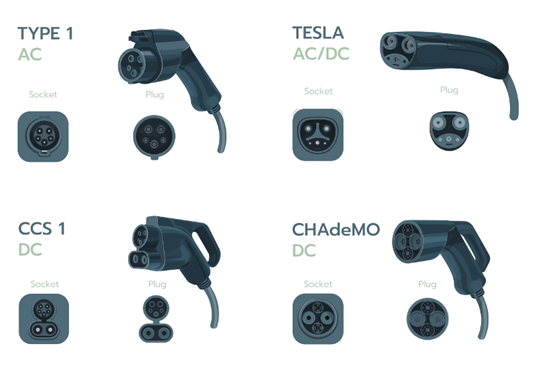
Common connector types in North America include:
| Type 1 / J1772 | Standard for Level 1 and Level 2 charging |
| Tesla (NACS) | Used by Tesla and increasingly adopted by other manufacturers Supports Level 1, 2 and DC fast charging |
| CCS Type 1 | Widely used for DC fast charging |
| CHAdeMO | An older fast‑charging option being phased out |
Adapters may allow vehicles to use chargers with different connector types.
Charging Speed Considerations
Charging speed affects how much driving range is added per hour of charging, but real‑world results vary depending on:
- Battery state of charge; charging slows as the battery fills
- Vehicle charging limits
- Charger capacity
- Battery management systems that protect battery health
- Cold weather impacts; colder temperatures may temporarily slow charging speed
How to Find Public Charging
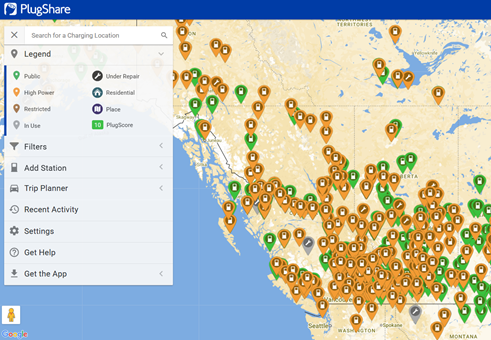
Public charging is widely available and getting easier to locate:
- In‑vehicle navigation systems can show nearby chargers, availability, and compatible connector types.
- Charging network mobile apps allow drivers to search for stations, check charging speeds, see real‑time status, and start charging sessions.
- Mapping apps and online tools, such as PlugShare, can be used to locate public chargers and do trip planning.
- Public chargers are commonly found at shopping centres, workplaces, municipal parking, recreation facilities, and along highways.
Before plugging in, it’s a good idea to confirm the charger’s connector type, charging level, and availability to avoid delays.
Choosing the Right Charging Option
- Most everyday charging happens at Level 1 or Level 2.
- DC fast charging is best used for long trips or when time is limited.
- The right choice depends on driving habits, vehicle capability, and access to charging infrastructure.
This page is under construction. Check back soon for updates.